Showing posts with label social and emotional. Show all posts

Sunday

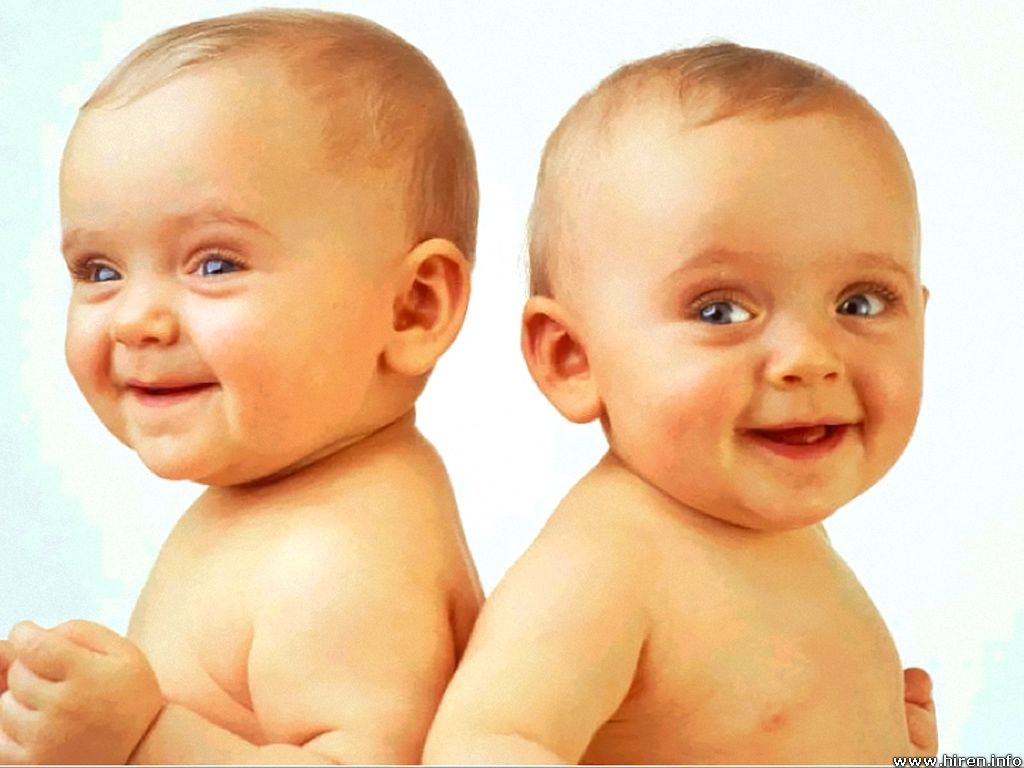
At how many months can a baby laugh


Every parent looks forward to their baby's first smile and their baby's first laugh. 
It is a feeling of real connection beyond the day to day routine of feeding 
and changing nappies that is very special. Also laughter, like a smile, 
is a communication that everyone in the whole world can understand.

At what age should my baby start to laugh? is a question asked by many parents. You can expect your baby to laugh somewhere between 3 to 6 months but keep in mind, as with all child development, most babies are different. So don't worry if your baby is not laughing at 4 months because everyone is unique and some babies just don't laugh as much as others. Please don't compare your baby to other babies, even other siblings.


What's in a Laugh?

A laugh may seem like a simple and spontaneous act but it is quite complex - it even has it's own science called gelotology. It is a brain development involved with various regions of the brain. When we laugh we use the diaphragm and parts of the respiratory system. 
Laughing is a form of communication and babies will be babbling and cooing before they laugh. 

Laughter consists of two parts -- a set of gestures and the production of a sound. When we laugh, the brain pressures us to conduct both those activities simultaneously. When we laugh heartily, changes occur in many parts of the body, even the arm, leg and trunk muscles. science.howstuffworks.com

You may also like this interesting article: How five-month-old babies know what’s funny
Before they speak or crawl or walk or achieve many of the other amazing developmental milestones in the first year of life, babies laugh. This simple act makes its debut around the fourth month of life, ushering in a host of social and cognitive opportunities for the infant.

Tuesday

Games for babies: everybody dance now!

baby dance helps development
Put on some of your own favourite music: it doesn't matter if it is rock, pop, classical, hip hop or jazz.

Hold baby close to you.

Support your baby's head by holding the back of their neck (as shown in photo).

Wednesday

Caring for Infants With Respect

The way we care for our babies is how they experience our love.  – Magda Gerber

Magda Gerber was an amazing woman who taught how we can have a great relationship and appreciation of our baby and embrace their ability for self-discovery.

Be careful what you teach. It might interfere with what they are learning. - Magda Gerber

Monday

Libraries have a lot to offer

Libraries are a free source of wonderful learning materials and now, in Australia and many other countries, they are a way for parents of young children to connect and learn.

You can borrow great baby books, for free, from your local library and there is usually a specific section of board books which are the absolute best for babies.

This means you can have lots of books in your home for your baby to explore and you can change books regularly. If one or two become favourites then you know which ones to purchase or request for birthday gifts.

Peek a boo

Babies seem to love this Peek a boo game, from around 3 months of age, and are happy to play it over and over again.

1.You can play it in  four different ways:
  • Hide your face behind your fingers, move your hands and say PEEK A BOO! (as in picture)
 

Wednesday

Baby Meditation

calm baby
BABY BUDDHA SCULPTURE
Give your baby the chance to experience calm contentment.

Wisdom, depth, understanding and insight come to children who have learned how to be calm, relaxed, at ease with themselves and able to watch and listen, not just be constantly involved. *

Research says that stimulation is good for baby and that their brain is developing now more than any other time. This does not mean that they need continual stimulation. Too much stimulation can be overwhelming.

Monday

Baby activities: Reading 1000 stories

This is my grandson. He loves books.

The more our kids love books,
the more they’ll pretend to read them,
and the more they pretend to read,
the more quickly they’ll learn to read.  MEM FOX*

If you are wondering what to do with your brand new baby, or your 3 month old baby or your crawler, you won't go wrong if you read to them. Children need to hear 1000 stories read aloud before they begin to learn to read on their own (Fox, 2001).

You can read anything to babies, even the newspaper, especially in the first few months, but if you are looking for books specifically for babies there is a list of some of my favourites here. (Older children here) You can purchase many of these books at my baby bookstore but you should really make the library your second lounge room.

Reading aloud to your baby has many benefits. It actually impacts on most of the areas of School Readiness:
Sharing regular time together reading helps healthy Social emotional development as it is a positive interaction which give us a sense of comfort, confidence and safety.
Reading affects a child's approach toward learning and makes them see that the significant people in their life value reading.
Communication and language use is developed by listening to others read.
Cognition or thinking skills and general knowledge are developed as babies look and listen to books.

*Mem Fox is one of my favourite Australian authors and has written many wonderful children's books including Hello Baby! and Ten Little Fingers and Ten Little Toes and my most favourite children's book WHERE is the GREEN SHEEP?
Here are her Read Aloud Commandments
1. Spend at least ten wildly happy minutes every single day reading aloud.
2. Read at least three stories a day: it may be the same story three times. Children need to hear a thousand stories before they can begin to learn to read.
These are the main "commandments" that relate to babies but you can read the rest at Mem's site or in her book Reading Magic: Why Reading Aloud to Our Children Will Change Their Lives Forever

REFERENCES:
Babies Need Books, by Dorothy Butler in 1980 encouraged parents to read to their babies and toddlers. She argued that scientific research showed by the age of four approximately half of an individual's ultimate intelligence was formed.

Set for Success: Espinosa, L. M. (2002). The connection between social-emotional development and early literacy.

NEGP - National Education Goals Panel is a bipartisan and intergovernmental body of US federal and state officials created to assess and report progress toward achieving the National Education Goals that created the Dimensions of School Readiness. 

Finding faces

Free Baby Activity for mother and baby
A mother gazes at her newborn infant

ACTIVITY: Looking at your baby's face, looking into baby's eyes and making animated expressions and smiling.
This is a simple activity that can be done anytime and there is a lot of science backing up the reasons why it is an important daily activity with your baby.

Babies are born with a remarkable ability that helps them identify faces. In experiments, newborn infants have shown preference for looking at faces over other visual stimuli ( Batki et al 2000).  They also prefer faces with open eyes and happy faces over frowning ones. (Farroni et al 2007). Eye contact is an important signal in interactions with other people and successful communication depends on the ability to detect the intention to communicate (Frith 2007).
When your baby sees you smile, it releases chemicals in her body. This makes her feel good – and the chemicals also help babies brain grow.
See a diagram explaining the science behind this.

Parents' faces entertains baby and actually make baby feel more secure and safe. (Study at University of Delaware USA)
So this activity is important because it:
  • creates and nurtures the bond between parent and child
  • helps baby feel secure and safe
  • helps baby develop and learn about the world
  • helps develop communication skills
So make direct eye contact but remember that babies don't always want to look into your eyes: they will look all over your face and tire of doing this quite quickly.

PHOTO CREDIT: Portrait of Zenon Thomas O'Donnell and his mother taken by  Dylan O'Donnell

SCIENTIFIC SOURCES:
Batki A, Baron-Cohen S, Wheelwright S, Connellan J, Ahluwalia J. Is there an innate gaze module? Evidence from human neonates.

Farroni T, Johnson M.H, Menon E, Zulian L, Faraguna D, Csibra G. Newborn's preference for face-relevant stimuli: effects of contrast polarity.
Frith C.D. The social brain? 
Frith C.D, Frith U. Social cognition in humans.
Grossmann T, Mark H Johnson, Sarah Lloyd-Fox, Anna Blasi, Fani Deligianni, Clare Elwell, and Gergely Csibra. Early cortical specialization for face-to-face communication in human infants.

Friday

Talking with your baby


Babies speech development in the 1st year

 
"Simply talking with an infant is a wonderful way to build attention, working memory, and self-control."  Center on the Developing Child HARVARD UNIVERSITY
 
Babies love "conversations" where there is give and take.  Their response IS with gurgling and babbling. Talking with your baby will help them talk, trust and learn. Somewhere around 4 to 6 months of age many babies will start to make sounds like "mmm" or "bbb" to interact with you.
 
The first language skill to develop is understanding what is heard. By around 6 months of age, most babies recognize the basic sounds of their parent's language.

Babies have the need for social interactions and lots of talk from loving adults also builds healthy relationships and social skills: building trust, dealing with emotional and physical needs, and interacting with others in positive ways. Many babies will calm down or smile when spoken to like the baby in the photo above.
 
By around 8 months of age some babies will try and imitate sounds that they hear. Keep in mind that all children vary in their development of language skills.
 
TALKING AND DEVELOPMENT: Research has shown that children from talkative families may have heard 30 million more words by age 3 than children from less-talkative families and that the more words the children had heard by age 3, the better they did on tests of cognitive development.
 
Having a talk in any language is a wonderful thing as bilingual children have been found to have better executive functioning skills than children who speak one language.
 
Tips on Learning to Talk from birth at Zero to Three
You might also like:

Books for babies


Reading aloud to your baby is a wonderful way to spend time together. Being read to is the beginning of the literacy and language skills needed for later reading.

It will help children understand that books are important, that you value books and what books are all about.

When should you start reading to your baby?

As early as possible.
From birth they will enjoy being held and listening to your voice so this is a good time to read rhyming books like nursery rhymes or the Mem Fox selections below.
By about 2 months babies may like to look at brightly coloured or contrasting pictures like the Tana Hoban books.
By 4 or 5 months they will be reaching and grasping and enjoying books with different textures like touch and feel books.

What books should I get for baby?
Board books are great for babies up to 2 year olds or even older. They are strong enough not to tear when little fingers reach for them.
Books made of material or plastic are also good.
Any book you enjoy reading is wonderful as it is about baby hearing your voice.
Books with simple, large pictures on a white background.
Books with babies in them or animals in them.
Books with photos of real things.
Books with a few words on each page.
Rhyming stories.
Touch and feel books.

Some suggested books that are suitable for baby:

I Went Walking by Julie Vivas
Ten Little Fingers and Ten Little Toes by Mem Fox
Where is the Green Sheep? by Mem Fox
Time for Bed by Mem Fox
Nana's Colours by Pamela Allen
When I Was a Baby by Deborah Niland
I can by Helen Oxenbury
I touch by Helen Oxenbury
Tickle tickle by Helen Oxenbury
Black on White by Tana Hoban
Red, Blue, Yellow Shoe by Tana Hoban
White on black by Tana Hoban
Who are they? by Tana Hoban
Night-Night Baby, a Touch and Feel book
That's Not My Teddy by Fiona Watt
Peek-A Who? by Nina Laden

Most of these books and others I recommend are available here.


What are your favourite books to read to baby?

Reading tips
Reading the same book over and over is usually enjoyed by babies and helps develop their language.
Hold your baby when you are reading.
You don't need to read the whole book at once.

Do you have any reading tips?

Top 10 baby play activities


In no particular order:
1. Baby massage
2. Finding Faces
3. Talking with your baby
4. Tummy Time and Floor Time
5. Outdoors
6. Singing songs
7. Dancing
8. Stories and books
9. Meditation
10. Make a mobile

What else would you add to the list for playing with babies?